Educator · Writer · Learning Designer

I believe that teachers can build a citizen body to thrive in an AI-enriched world.

I've spent twenty-five years helping students discover what they think and how to say it. As AI enters the classroom, I'm working to make sure it deepens that capacity rather than replacing it.

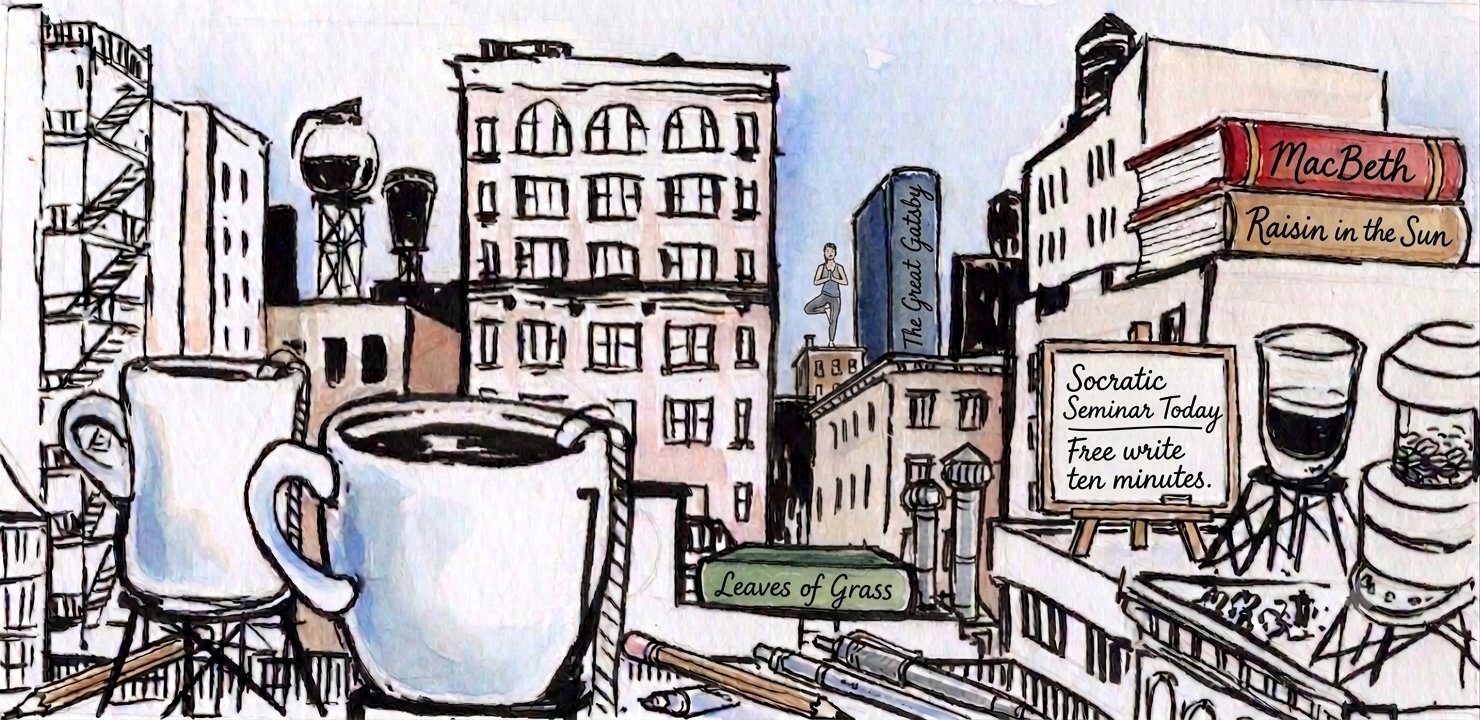
Hand-drawn ink-and-watercolor sketch of a New York City skyline woven with the classroom: oversized coffee cups, rooftop water towers, books labeled Macbeth, A Raisin in the Sun, The Great Gatsby and Leaves of Grass, an easel reading 'Socratic Seminar Today — Free write ten minutes,' and a small figure in a yoga pose.

The foundation

A quarter-century in the room

The classroom has taken many shapes: a rural secondary school in Zimbabwe with the Peace Corps; university creative-writing and composition courses at Indiana University; a suburban high school in Chappaqua, New York; and, now and at the start, a Bronx transfer school serving students who haven't been served well elsewhere. The work has never been about a transaction or content, but about building relationships and capacity.

25 years
teaching, Zimbabwe to the Bronx
Rural Zimbabwe · Indiana University · Chappaqua · The Bronx
classrooms across three decades
Many forms
games, writing, embodied practice, research

Between classrooms: a creative-writing fellowship and a teaching award at Indiana University, textbooks still used in rural Zimbabwean classrooms, and a stint as a research intern in a Columbia University neuroscience lab studying how social experience shapes learning, stress resilience, and memory.


Friction & Fluency

AI didn't create the gap between performing understanding and actually having it. It exposed it. The work now is to teach students the difference — and to defend the friction that makes real learning possible.

Current work

AI literacy that protects judgment

AI is entering schools faster than anyone can think about it carefully. The question isn't whether students will use it — it's whether they'll keep the judgment to know when to struggle alone, when to reach for the tool, and when delegating their thinking costs them something that matters.

I work with high school educators to build AI literacy around the real stakes: civic capacity, genuine thinking, and the freedom not to outsource your own mind. The answer to AI in education isn't more surveillance and control. It's more relationship — the dialogic, constructivist tradition of the writing workshop, applied to a new problem.

In my own classroom this took the shape of a five-week AI-literacy pilot built around three values — agency, awareness, and human grounding — with students logging and scoring their own AI use. Their work became the foundation for school-wide policy, which they co-presented to faculty. I shared the results as a 2025–2026 Read Write Code Fellow with United Way NYC and NCTE.

I'm looking to bring that classroom-grounded perspective to the organizations shaping how this technology reaches students: frontier labs, education-reform initiatives, and platforms that want someone who understands both the room and the model.

Read my New York Times letter on AI in the writing classroom →
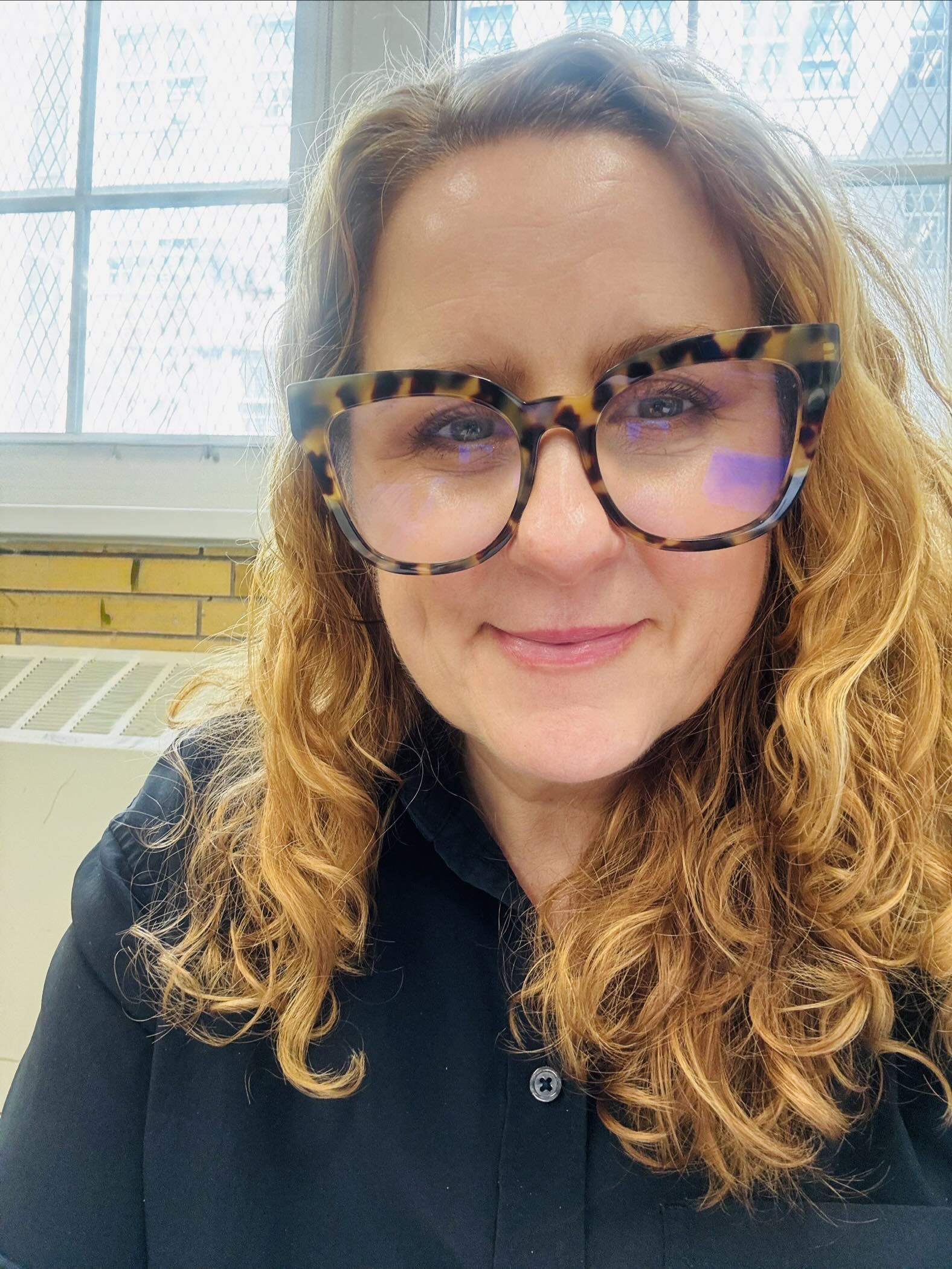
K. A. Keener, an educator with curly auburn hair and tortoiseshell glasses, in a classroom by tall wired-glass windows.
In the room where the questions get asked.

Evidence, not a résumé

Twenty-five years of making things that teach

As I teach people at different moments of beginnings, I cultivate in myself a beginner's mind, leaning into the friction and curiosity that comes with engaging with a new domain. Below are a sample of projects I've built in a growth mindset in public.


Out in the world

Selected writing & work

A sampling of the published, public-facing work — in print, on stage at conferences, and online.